
Freelancing is a work style where a person earns money by using skills independently. A freelancer does not depend on a single company. Instead, work is done for different people or businesses according to agreed tasks and time.
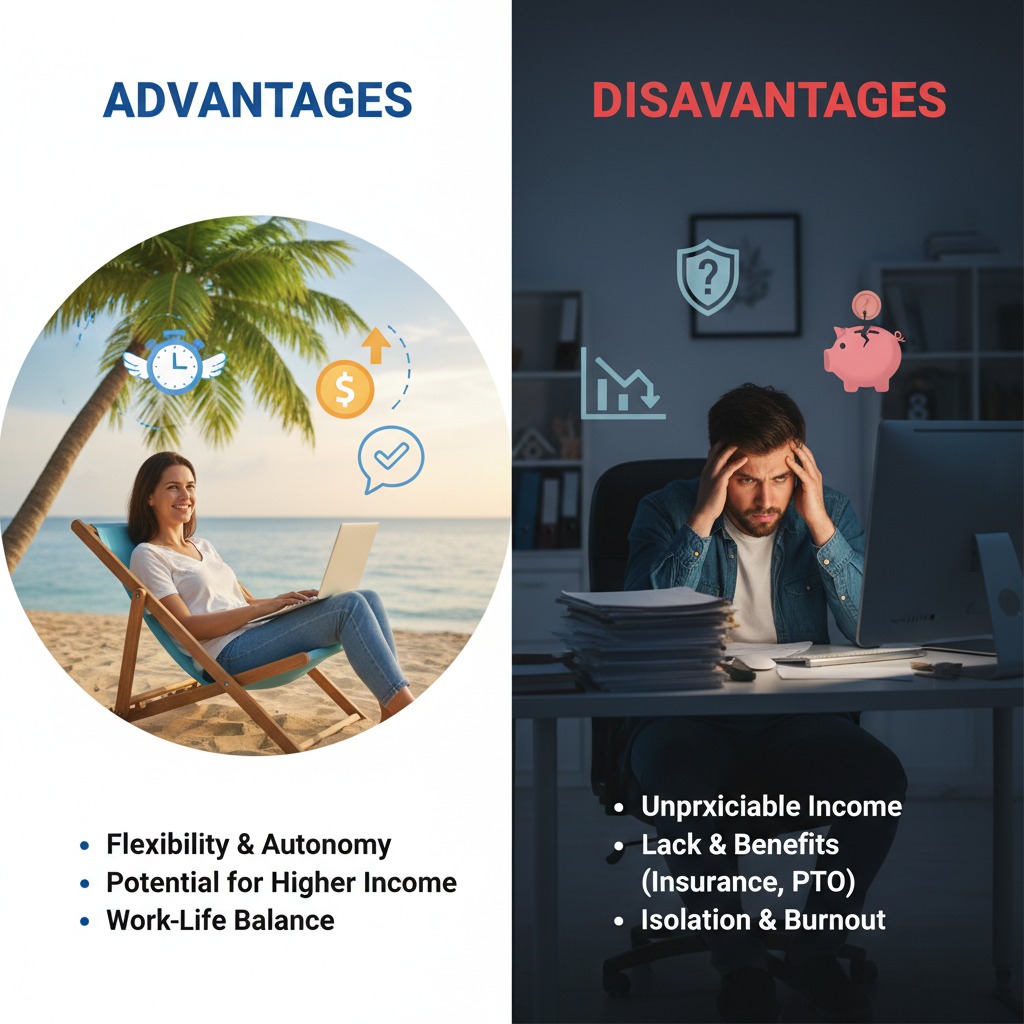
This way of working gives freedom, but it also brings responsibility. To make a smart decision, it is important to understand both the positive and negative sides of freelancing.
What Makes Freelancing Different
In freelancing, a person is responsible for finding work, completing tasks, and managing time. Payment depends on effort and skills, not on fixed monthly salary. This makes freelancing flexible, but also uncertain.
Advantages of Freelancing
Work From Anywhere
Freelancers are not tied to an office. Work can be done from home or any quiet place with internet access.
Flexible Daily Routine
There is no fixed office timing. Freelancers decide when to start work and when to take breaks.
Personal Choice of Projects
Freelancers can accept or reject work. This helps them focus on projects that match their skills.
Opportunity to Earn More
Income is not limited. Skilled freelancers can increase earnings by working with better clients.
Continuous Learning
Every project brings new experience. Freelancers naturally improve communication, technical, and problem-solving skills.
Disadvantages of Freelancing
No Fixed Monthly Income
Some months are busy, others are slow. Income may change regularly.
No Employment Benefits
Freelancers do not receive job security, paid holidays, or medical benefits.
Mental Pressure
Handling deadlines, clients, and payments at the same time can feel stressful.
High Market Competition
Many beginners enter freelancing daily, which makes it harder to get work at the start.
Self-Management Required
Freelancers must manage time, money, and work discipline without supervision.
Freelancing vs Regular Job
A regular job offers stability, while freelancing offers freedom. One provides security, the other provides independence. The better option depends on personal priorities.
Who Should Choose Freelancing
Freelancing is suitable for people who:
Prefer independence
Can manage time properly
Are ready to face uncertainty
Want long-term skill growth
Conclusion
Freelancing is neither easy nor impossible. It is a career path that rewards effort, patience, and learning. Understanding both advantages and disadvantages helps avoid wrong expectations and prepares you for real challenges.
Leave a Reply